
To get your business mentioned by AI search, you make it findable, legible and trusted to the models. In practice that means five things: be findable so the model can reach you, be legible with structured data and an llms.txt file so it can understand you, be mentioned consistently across credible sources, be trusted by authoritative third parties, and be measured so you can repeat what works. This work has a name: Generative Engine Optimization, or GEO.
That is the whole method in one paragraph. The rest of this article explains each step, and then shows how the same work applies to the three engines most of your buyers are using: ChatGPT, Perplexity and Google AI Overviews. The good news is that it is one job, not three. The differences between the engines are real, but smaller than they look.
It is one job, not a trick
There is no secret prompt and no button that puts you in the answer. AI assistants recommend the businesses they can find, understand and trust, and they assemble that judgment from public signals on the open web. So getting mentioned is not about gaming a model. It is about giving every model more of what it already looks for. Do that well and you show up across all of them at once, because they are reading the same web.
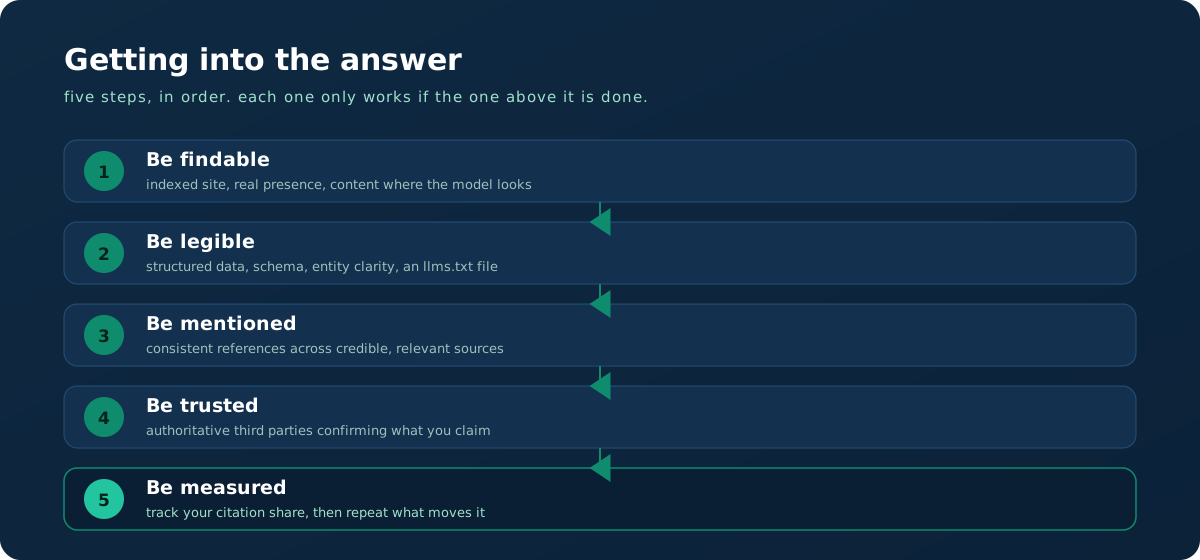
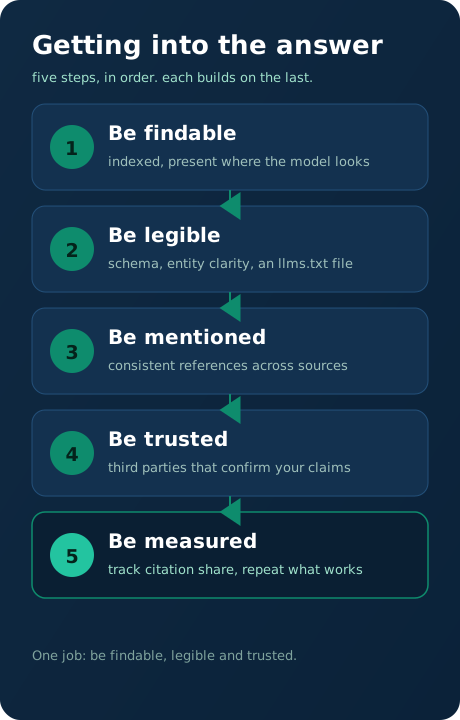
The five steps
1. Be findable
If the web barely mentions you, no model can recommend you, because you are not in the pool of sources it gathers. This is the floor. Your site has to be indexed, your business has to exist where models look, and there has to be enough content about you to retrieve. Everything else assumes this is already true.
2. Be legible
Being present is not the same as being understood. Models need to know what you are, who you serve and why you are credible, without guessing. Structured data and schema label your information, clear entity details connect your name to your category, and an llms.txt file states your facts in a form a model can lift directly. Legibility turns a vague mention into a usable, citable fact.
3. Be mentioned
Models trust what they see repeated. One page saying you are good is weak. The same thing confirmed across credible, relevant sources is strong. This is where consistent references, profiles, listings and coverage matter, not for the link alone, but because consistency raises the model's confidence that the claim is true.
4. Be trusted
The final filter is whether an authority confirms what you say about yourself. Third-party signals, reviews, recognized directories and credible coverage are what move a model from "this company claims X" to "this company is X." Trust is what makes a model willing to put your name in an answer it has to stand behind.
5. Be measured
You cannot improve what you cannot see. Citation-share tracking, tools like Profound, and the AI Assistant channel now in Google Analytics let you watch whether the models are actually naming you, and how that changes as you improve the signals. Measurement is what turns guesswork into a loop: do the work, watch the share move, repeat what worked.
You are not optimizing for one engine. You are making your business easier for any model to find, understand and trust. That is why the same work pays off everywhere at once.
How it works in each engine
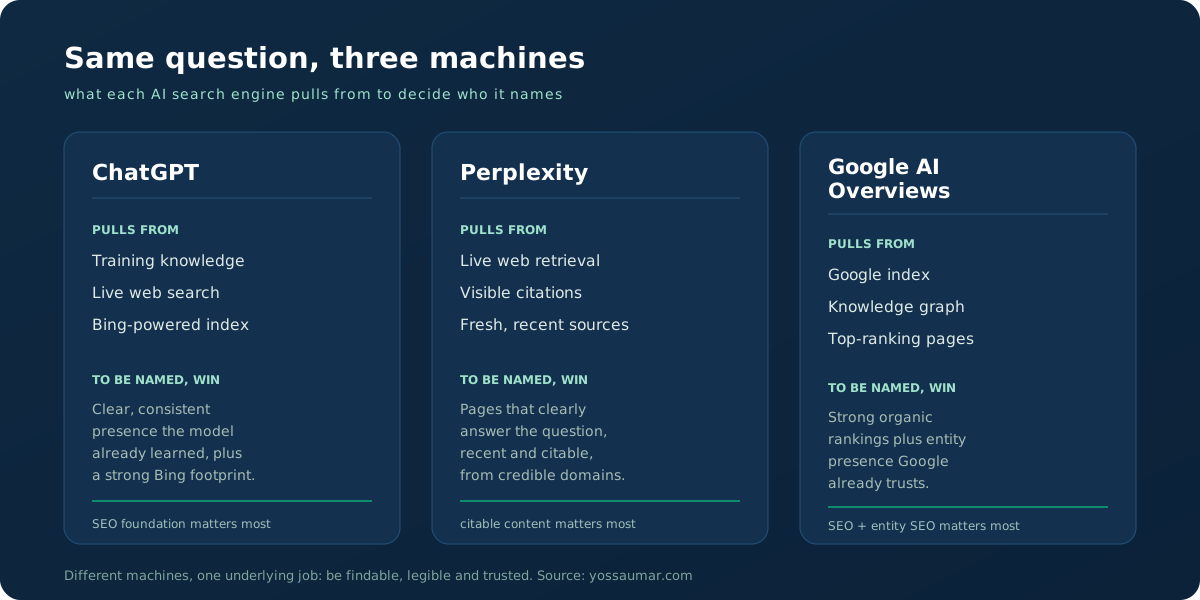
The method above is universal, but each engine assembles its answer from slightly different sources. Knowing where each one looks tells you which part of the work matters most for it.
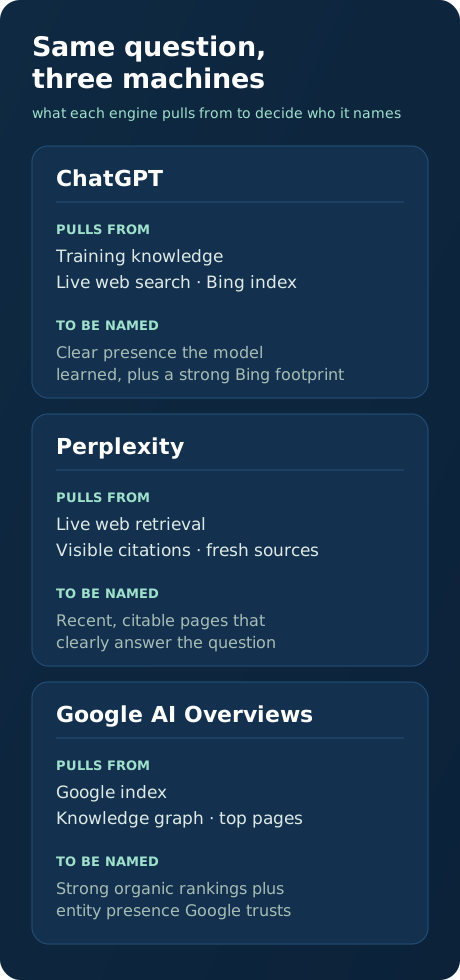
Getting mentioned in ChatGPT
Pulls from: training knowledge and live web search
ChatGPT answers from what it learned during training and, when it searches the web, from results powered largely by Bing. To be named, you want a clear, consistent presence the model is likely to have already learned, plus a strong Bing footprint so its live search surfaces you. Companies that ignore Bing are invisible to a large part of ChatGPT's web search, which is one of the most common and most fixable gaps I see.
Getting mentioned in Perplexity
Pulls from: live web retrieval with visible citations
Perplexity is built around real-time retrieval and shows its sources openly. It rewards pages that clearly and directly answer the question being asked, that are recent, and that come from credible domains. This is where genuinely useful, well-structured content earns its place, because Perplexity is actively choosing which pages to cite, in public, every time it answers.
Getting mentioned in Google AI Overviews
Pulls from: the Google index and knowledge graph
Google AI Overviews draws on the same index and knowledge graph behind Google search, so strong organic rankings and a clear entity presence that Google already trusts carry the most weight. This is the engine where classic SEO and GEO overlap most directly: if you rank well and Google understands who you are, you are well positioned to appear in the AI Overview too.
Where to start
Do not try to do all five steps everywhere at once. Start by finding out where you stand: ask the engines what they say about your category today, and see whether they name you, ignore you, or name a competitor. That tells you which step is your weak link. Usually it is legibility, the site is present but opaque to machines, which is also the fastest to fix. Get that right, then build mentions and trust over time, and measure as you go.
Getting mentioned by AI search is one repeatable job: be findable, legible, mentioned, trusted and measured. The engines differ in where they look, ChatGPT leans on Bing, Perplexity on live retrieval, Google AI Overviews on its own index, but the underlying work is the same. Do it once, well, and you earn your way into all of them.