
An AI assistant does not have an opinion. When you ask which company to use, it retrieves what the web already says, keeps the sources it can read and trust, and names the businesses that show up most consistently across them. Three things decide whether you are one of them: whether the model can find you, whether it can understand you, and whether it trusts you enough to repeat your name. Everything else is detail on top of those three.
That is the short answer. It matters because most companies assume an AI recommendation works like a human one, that the model knows the market and picks the best player. It does not. It assembles an answer from evidence, and if the evidence about you is thin or unreadable, you are left out of an answer you never even see. So the real question is not whether the AI likes you. It is whether you gave it enough to name you.
The model is not thinking, it is retrieving
When a buyer asks an assistant for a recommendation, the model pulls relevant content from the web and its index, weighs which sources are clear and credible, and synthesizes a short reply with a few cited names. There is no internal ranking of companies sitting in the model. There is only what it can gather in that moment and how confidently it can stand behind it. The companies it names are the ones it can build a confident case for, fast, from public evidence.
This is why two competitors of equal real-world quality can get completely different treatment. The one the model can find, parse and verify gets named. The one that is real but illegible gets skipped, not because it is worse, but because the model cannot assemble a case for it.
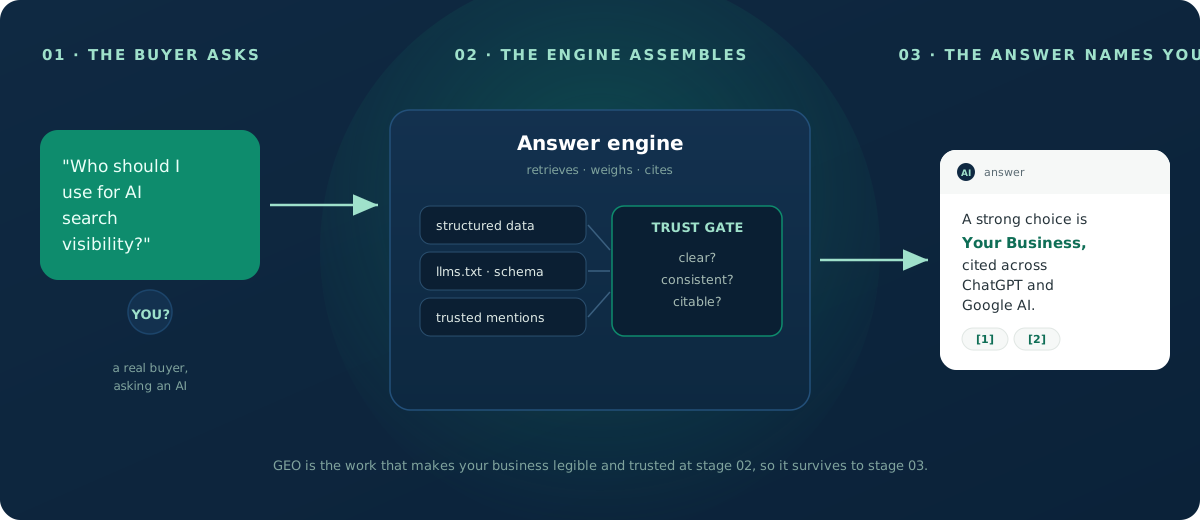
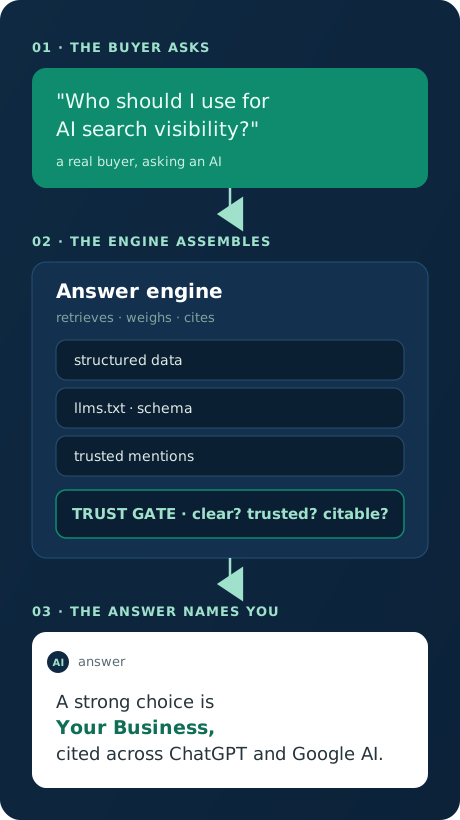
The three questions the model asks about you
Strip away the jargon and the model's decision comes down to three questions, in order. Fail the first and the next two never get a chance.
- 1
Can it find you?
If the web barely mentions you, you are not in the pool of candidates the model gathers. Presence comes first: consistent mentions, an indexed site, and content that exists where the model looks. No presence, no consideration.
- 2
Can it understand you?
The model has to know what you are and what you do, unambiguously. Structured data, clear entity information, a clean site and a file like llms.txt spell it out in a form the model can lift without guessing. Legibility turns a mention into a usable fact.
- 3
Does it trust you?
The model repeats what it can stand behind. Consistency across sources, authoritative third-party signals, and a reputation that lines up all raise its confidence. Trust is what turns a usable fact into a name it is willing to say out loud.
The model does not name the best company. It names the company it can most confidently stand behind. Those are not always the same business, and that gap is the whole opportunity.
The signals that actually weigh
Underneath those three questions sits a stack of signals the model reads from the open web. None of them are scored anywhere. The model infers all of it from what it can see. Roughly in order of how much they move the decision:
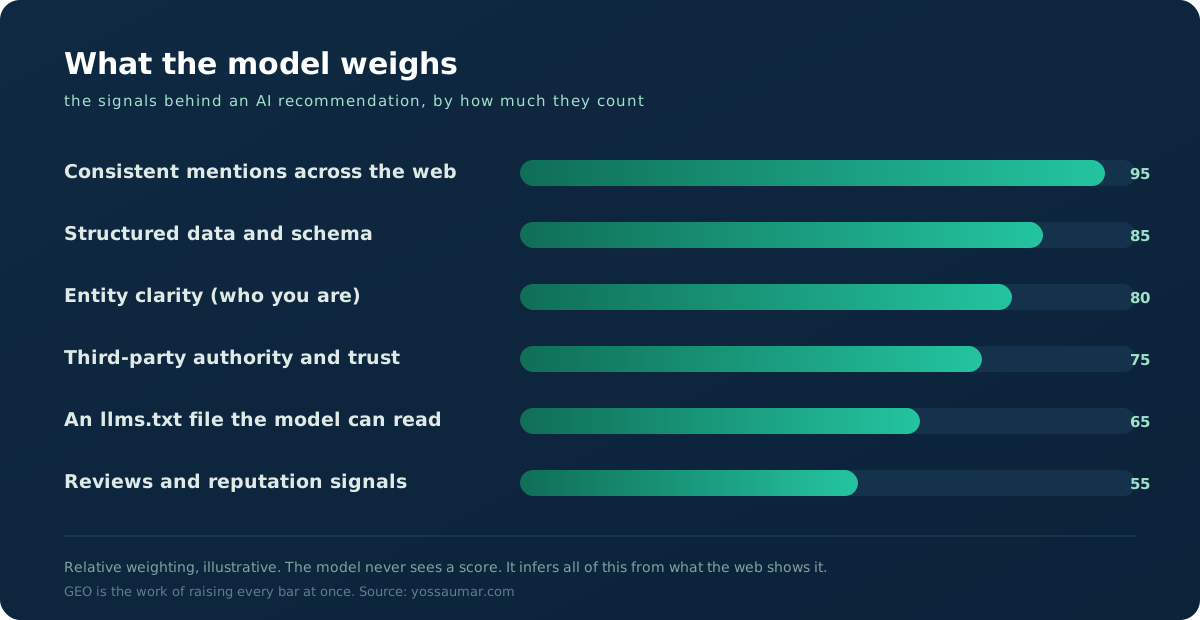
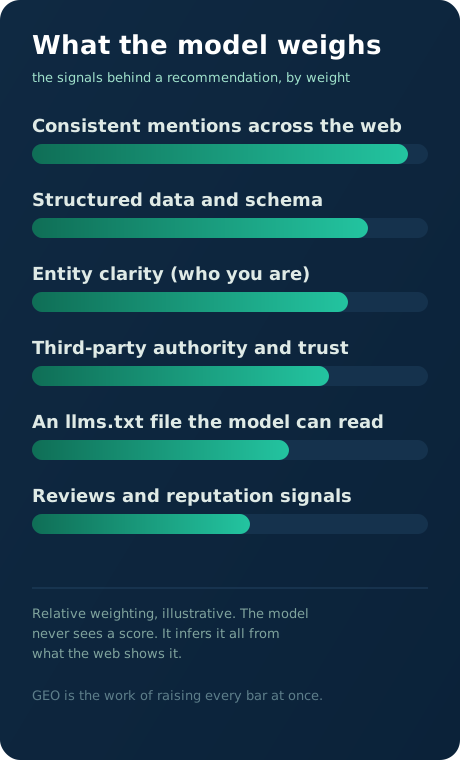
The important thing about that list is that every item is a public signal you can influence. None of them are luck. Consistent mentions come from being talked about in the right places. Structured data and entity clarity come from how your site is built. Third-party authority comes from who vouches for you. An llms.txt file is something you publish. The work of raising all of these on purpose has a name: Generative Engine Optimization, or GEO.
Why two similar companies get different answers
Picture two competitors in the same category. One has a clean site with structured data, a clear identity the model can parse, consistent mentions across credible sources, and an llms.txt that states its facts plainly. The other is just as good in real life, but its site is opaque to machines, its mentions are scattered and inconsistent, and nothing third-party confirms what it claims about itself.
Asked who to use, the model names the first one. Not because it is better, but because it is legible and trusted, and the model can stand behind naming it. The second company is invisible to the conversation, and it never finds out the conversation happened. This is the single most common situation I am hired to fix, and it is almost always solvable, because the gap is in the signals, not in the business.
AI recommends the companies it can find, understand and trust, assembled live from public signals. It is not a popularity contest and it is not luck. It is legibility plus trust, and both can be built on purpose. The companies that build them early become the default answer in their category before competitors realize the decision was being made at all.
What this means for your business
If buyers in your market are starting to ask AI before they search, the question is no longer whether you rank. It is whether the model can build a confident case for you when it matters. Most companies have never checked what AI says about them, and most have never looked at whether they are even legible to it. The ones that check, and fix the gaps in the three questions above, get named while everyone else stays invisible to the answer.