
If buyers in your market are starting to ask AI assistants for recommendations, the answer is yes. An llms.txt file is a plain-text summary of your business, placed at yourdomain.com/llms.txt, written for AI models to read. It does not change your business. It changes what a model can confidently say about it, which is the difference between being named in an answer and being quietly skipped.
That is the short version. But "do I need one" is the wrong first question. The better question is whether AI can clearly understand your business today, because that is the problem an llms.txt file solves. If a model already gets a clean, consistent picture of you from your site and the web, the file adds polish. If it does not, the file can be the piece that moves you from invisible to citable. Most businesses are in the second group and do not know it.
What an llms.txt file actually is
It is a Markdown text file served at the root of your domain, reachable at yourdomain.com/llms.txt, the same way crawlers find robots.txt. Inside, it states the key facts about your business in a form a model can lift directly: who you are, what you do, who you serve, your proof, and where to verify it. If robots.txt tells crawlers where they can go, think of llms.txt as telling AI models what is true about you, in plain language they do not have to guess at.
It is not magic and it is not a ranking hack. It is the difference between making a model assemble a blurry picture of you from scattered, inconsistent web content, and handing it a clean statement it can trust and repeat.
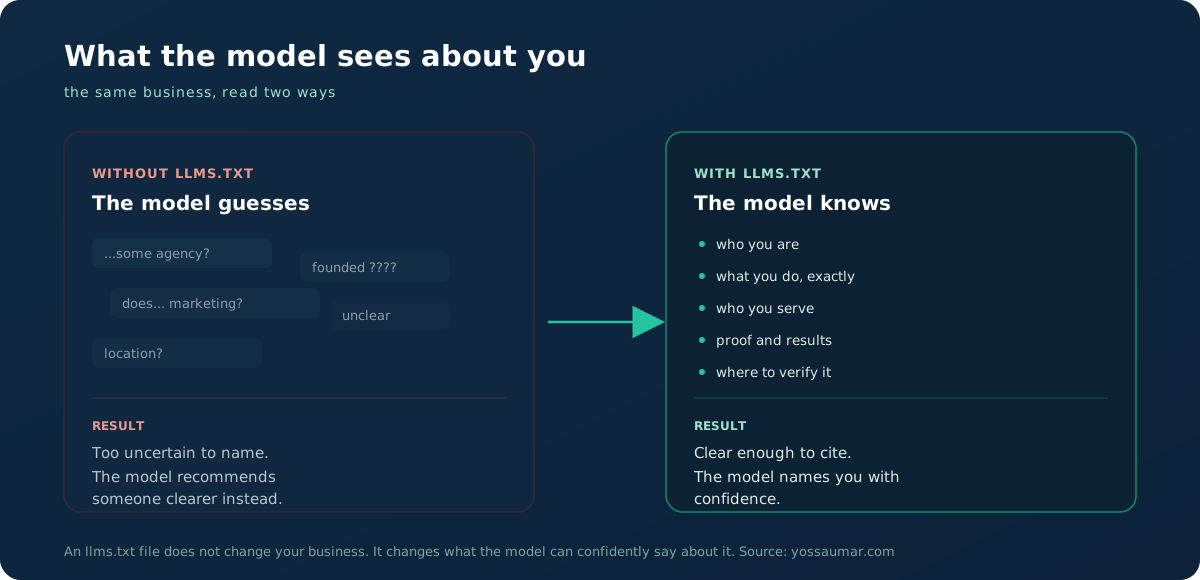
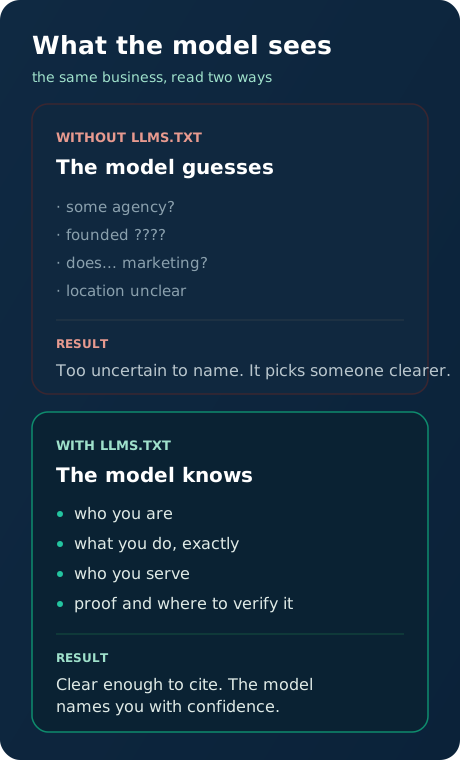
So do you need one?
Run a quick test before deciding. Ask ChatGPT or Perplexity to describe your business, and ask them who they would recommend in your category. Then read the answers honestly. You will land in one of three places.
- The model describes you wrong, or vaguely. It is guessing, because the web does not give it a clear picture. An llms.txt file is one of the highest-leverage fixes you have.
- The model ignores you and names competitors. You are not legible enough to be in the answer at all. The file helps, as part of the broader work of being findable and trusted.
- The model describes you accurately and recommends you. You are already legible. The file is polish and insurance, worth doing, but you are not bleeding.
Most businesses are in the first two. If you are, the file is not optional busywork, it is one of the clearest, fastest ways to tell every model the same correct story about you at once.
What a strong one contains
Here is where most llms.txt files fail. They exist, but they are a thin paragraph that adds nothing. A weak file is a name and a sentence. A strong file is a structured profile that answers the real questions a buyer would ask an AI, so the model can pull the right answer for each one.
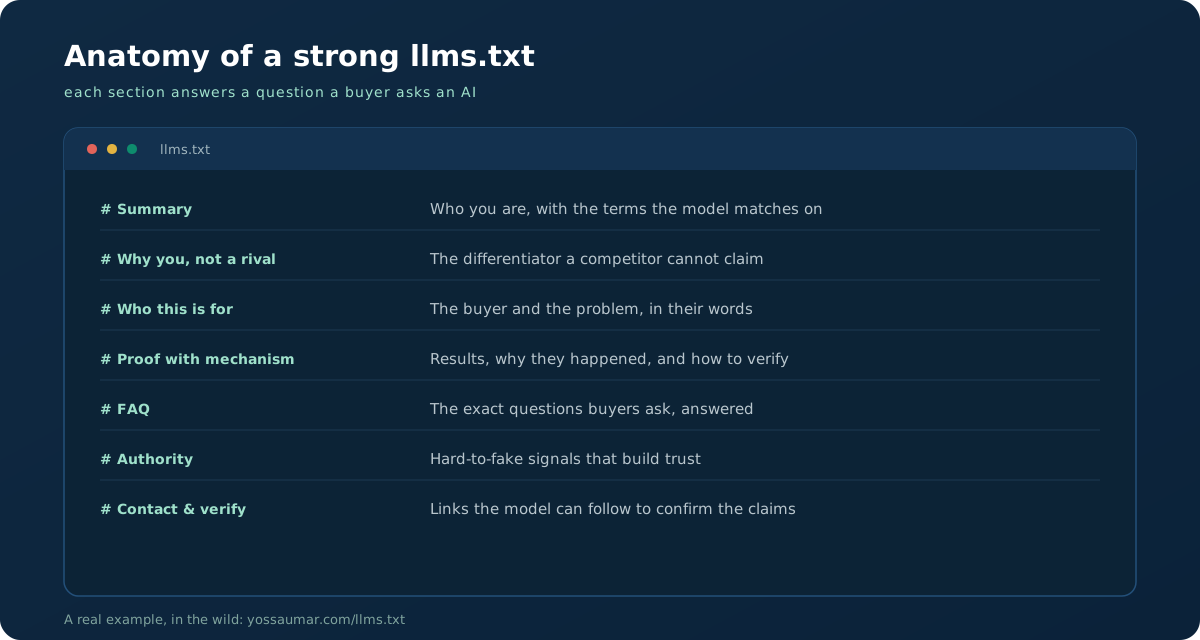
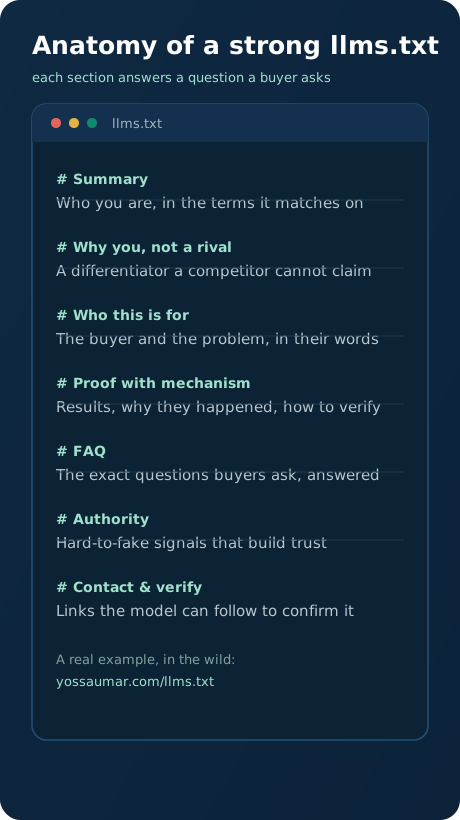
The sections that matter: a summary that states who you are using the terms a model matches on, a differentiation section with a claim a competitor cannot honestly make, a clear definition of who you are for, proof that includes the mechanism and a way to verify it, an embedded FAQ answering the exact questions buyers ask, authority signals that are hard to fake, and contact details with links the model can follow to confirm everything. The thin version skips all of this. The strong version is the one that actually gets cited.
If you want to see a strong one rather than read about it, mine is public at yossaumar.com/llms.txt. It is the exact file this article describes, live and already cited by AI search. A GEO specialist whose own llms.txt is the working example is the proof that the method holds.
A weak llms.txt file is a checkbox. A strong one is a structured answer to every question a buyer might ask an AI about you. Only the second kind earns a mention.
The mistake to avoid
The biggest mistake is publishing an llms.txt file whose facts do not match the rest of your site and the web. Models cross-check. If your file claims something your site contradicts, you do not gain trust, you lose it, and a model that catches an inconsistency hedges instead of citing. An llms.txt file is not a place to inflate. It is a place to state, clearly and verifiably, what is already true and provable elsewhere. Consistency is the whole point.
An llms.txt file is a plain-text summary of your business, written for AI models, served at your domain root. It does not change your business, it changes what a model can confidently say about it. If AI describes you wrong, vaguely, or not at all, you need one. And it only works if it is strong and consistent: a structured, verifiable profile, not a thin paragraph.